 |
|

|
|
||||||||||||||||||||

|
|
|
Iranian Theatre and Kandinsky:
Katayoun Salmasi
|
|
|
|
Introduction With these few sentences, our newest Guest Writer, Katayoun Salmasi, points us to original, advanced perspectives on the professional relevance of Kandinsky’s lifelong dedication to the theatre. In the first place, she introduces us to stage designers conversant with Kandinsky’s theories pertaining to the stage—his “Monumental Art,” or “Total Work of Art”—and venturing beyond, and separate from, his own play texts. This aligns with Kandinsky’s fondest hopes. As Salmasi introduces us to the work of production designers and their inspired designs, we see clearly the elements and discipline of Kandinsky’s art-thinking in action as cornerstones of arts-thinking in the broadest possible ways. In the second place, Dr. Salmasi articulates a major dead end that has stymied too many purported productions of Kandinsky’s plays—most often, Yellow Sound—wherein not understanding his theatrical ideas, or even his paintings, the stage is simply filled with a chaos meant to represent “abstraction.” In such cases, it’s enough to use Kandinsky’s name to bring in audiences. Our guest writer underlines the concepts present in stage events that fulfill Kandinsky’s intentions. All in all, what follows gives us an expanded sense of the possibilities of Kandinsky’s theatre. The ingenious ways the Iranian theatre has achieved this expansion, while also creating an opening for Kandinsky to join the modern theatre—well, that is Katayoun Salmasi’s tale to tell and our excellent good fortune to hear.
Lissa Tyler Renaud *
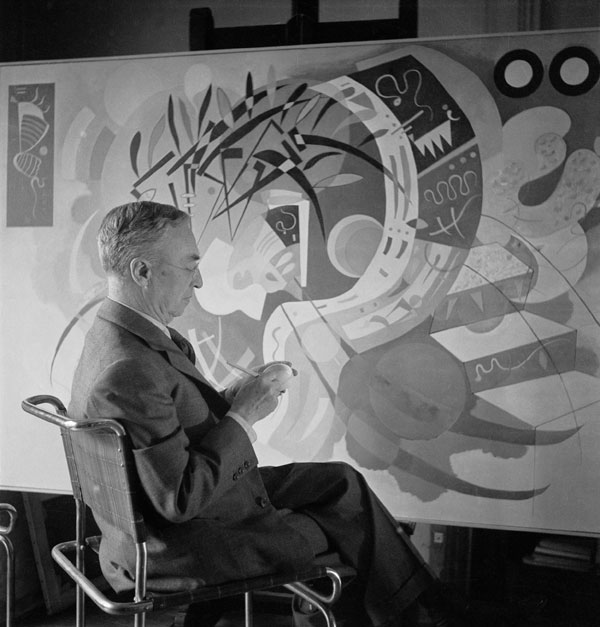
Wassily Kandinsky working on Dominant Curve in his studio
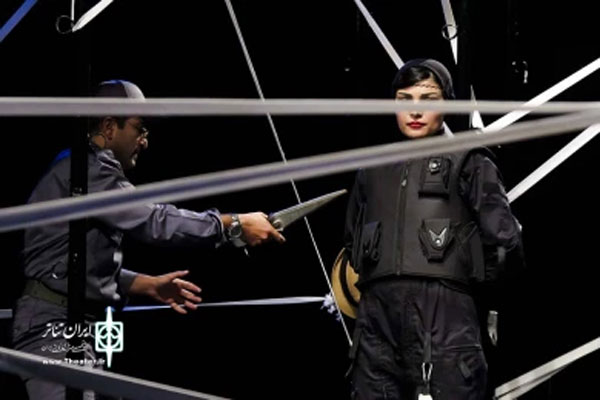
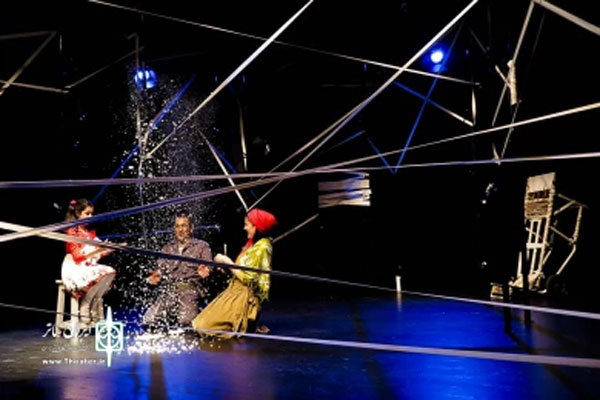
Part 1 traced Kandinsky’s path into Iran from the Tehran Museum of Contemporary Art to Persian translations and theatre scholarship [see here]. His movement from theory to stage practice can be seen more clearly in Good Morning, written and directed by Cyrus Hemmati, an Iranian playwright, actor, and theatre director. During a discussion of the production at Tehran City Theatre on September 21, 2016, stage designer Reza Mahdizadeh referred directly to Kandinsky’s theories. He described the way lines created and extended a space that could remain in the spectator’s mind. As the performance continued, that space became increasingly restricted before eventually opening toward release.
Scene from Good Morning, written and directed by Sirus [Cyrus] Hemmati, at Sayeh Hall, Tehran City Theater, September 2016. Photograph by Reza Motarian/Iran Theater. Mahdizadeh’s explanation is important because it shows a conceptual rather than decorative use of Kandinsky. He did not claim to have copied a specific painting. Kandinsky’s theory helped him think about how lines could shape the spectator’s perception of space and express the tightening dramatic world of the play. The influence operated through the organization of the stage rather than through visual imitation.
A more direct example appeared a few months later in Iranian
director Mohammad Mehdi-
Shahi
’s production of Samuel
Beckett’s Endgame, performed at Molavi Hall in Tehran from
December 4 through December 23, 2016. Mehdi-Shahi
approached Beckett through a deliberately interdisciplinary
visual scheme: before the production opened, he named
Kandinsky’s paintings, Alberto Giacometti’s sculptures, and
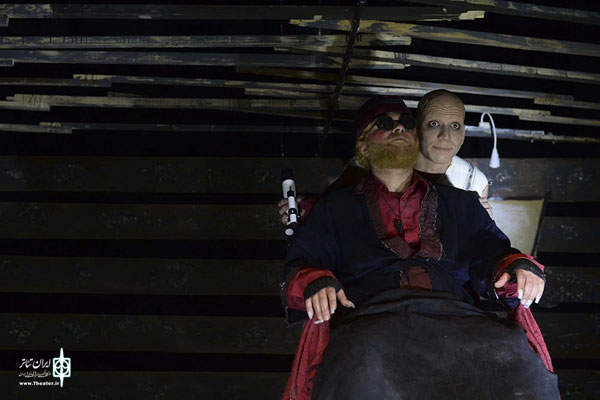
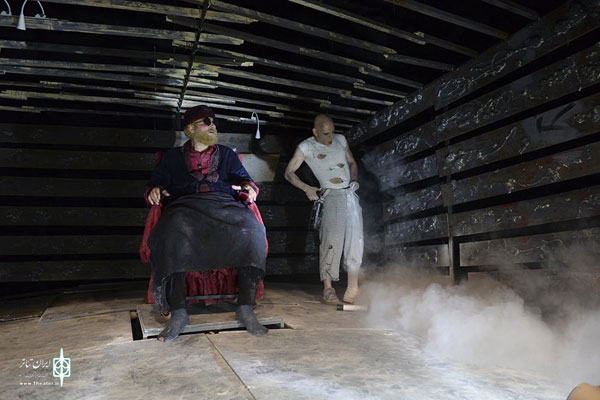
Each reference served a different purpose. Giacometti’s elongated figures influenced the physical appearance and casting of the characters, while Eliot’s The Waste Land contributed to the atmosphere of the production. Kandinsky’s broken lines were used specifically in the scenic design. The production did not attempt to recreate an entire Kandinsky painting. It extracted one visual principle—the expressive force of broken lines—and placed it within Beckett’s enclosed and unstable dramatic world. That choice suited Endgame. Beckett’s play takes place in a nearly empty interior where the characters appear trapped within an exhausted routine. The space is both physical and psychological. Broken lines can disturb the apparent stability of such a room, suggesting fracture without requiring realistic explanation. Kandinsky’s influence allowed the design to express instability through form before the actors communicated it through language.
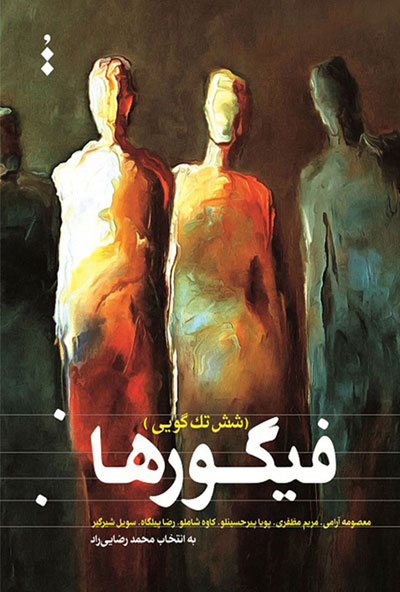
Samuel Beckett’s Endgame, designed and directed by Mohammad Mehdi-Shahi, at Molavi Hall, Tehran, December 2016. Photograph courtesy of Iran Theater. Kandinsky entered Iranian theatre in another way on January 17, 2017, when Maryam Mozaffari ’s monodrama I, Wassily Kandinsky, Was a Blue Rider was presented at the seventh Monoliv Festival at Mowj-e No Theatre in Tehran. Mohammad Rezaei-Rad , an Iranian playwright, director, and teacher whose practice ranges from performance to theatre research, performed the work as a staged reading. The play later appeared in Figures, a collection of six monodramas selected by Rezaei-Rad and developed through his graduate playwriting course at the University of Art.
Cover of Figures: Six Monologues Selected by Mohammad Rezaei -Rad, which includes Maryam Mozaffari’s I, Wassily Kandinsky, Was a Blue Rider. Published in Persian by Torreh Publications. The monodrama occupies a different place in Kandinsky’s Iranian reception. In Good Morning and Endgame, his theories and paintings contributed to the organization of theatrical space. In Mozaffari’s work, Kandinsky himself became a dramatic figure. His biography, artistic identity, and association with the Blue Rider provided material for theatrical imagination. The painter was no longer outside the performance as an influence; he entered it as a character. The play does not prove the existence of a broad Kandinsky movement in Iranian theatre, but it indicates that his name carried enough cultural meaning to support an independent dramatic work. His journey from painting to theatre in Iran had reached another stage: from a museum collection and translated theory to scenic practice, and finally to dramatic representation.
Samuel Beckett’s Endgame, designed and directed by Mohammad Mehdi-Shahi, at Molavi Hall, Tehran, December 2016. Photograph courtesy of Iran Theater. The evidence supports a careful conclusion. Kandinsky has not exercised a dominant influence on Iranian theatre, and no Iranian production of The Yellow Sound has yet been documented. His theatrical presence remains selective. Nevertheless, it is more substantial than a few passing references. It can be traced through a painting acquired for Iran’s national modern-art collection, several Persian translations, a body of critical and academic writing, theatre publications, stage designs, production concepts, and an Iranian monodrama devoted to his identity. His strongest influence appears in scenography. Iranian designers have drawn from his understanding of line, space, abstraction, and visual tension rather than reproducing the surface of his paintings. In Good Morning, his theory helped explain how lines could construct a mental and dramatic space. In Endgame, his broken lines became part of the physical design. In I, Wassily Kandinsky, Was a Blue Rider, his life and artistic identity moved into the dramatic text itself.
Scene from Good Morning, written and directed by Sirus [Cyrus] Hemmati, at Sayeh Hall, Tehran City Theater, September 2016. Photograph by Reza Motarian/Iran Theater. Kandinsky’s history in Iran therefore follows a logical but unusual path. His painting entered the country during the cultural expansion of the 1970s. After 1979, while much international modern art became less publicly accessible, his ideas continued to circulate through artists, translators, teachers, and students. Those ideas eventually reached the theatre, where they were adapted to the particular needs of Iranian productions. Iranian theatre did not simply reproduce Kandinsky. It translated him from one artistic language into another: from painting to space, from line to movement, from color to light, and from the historical artist to the living body of a performer. * Further Reading
|
|
|||||||||||||||||
|
|||||||||||||||||

|
||||||||||||||||||||||||||||||||||||||||||
|
||||||||||||||||||||||||||||||||||||||||||

|
|||||||||||||
|
|||||||||||||

|
||||||||||||||||||||||||||||||||||||||||||||||||||||||||||||||||||||||||||||||||||||||||||||||||||||||||||||||||||||||||||||||||||||||||||||||||||||||||||||||||||||||||||||||||||||||||||||||||||||||
|
||||||||||||||||||||||||||||||||||||||||||||||||||||||||||||||||||||||||||||||||||||||||||||||||||||||||||||||||||||||||||||||||||||||||||||||||||||||||||||||||||||||||||||||||||||||||||||||||||||||


|
|
|
|