|
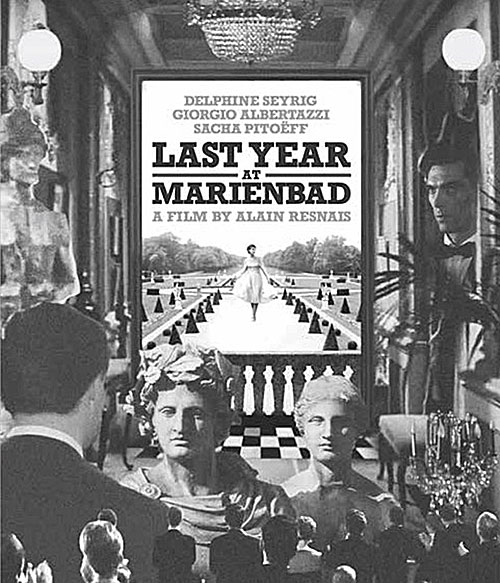
Summer, Paris, cinema: an excerpt from my memoir Kiss
Me Again, Paris.
The setting is a
cinema,
L’Entrepôt,
in the 14ème
arrondissement, at
the end of the
seventies. The
scene: running into
an almost stranger
after wandering into Last
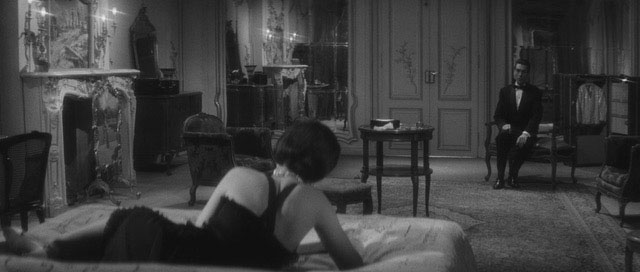
Year at Marienbad (1961). Contradictory views of a film that represented art, intellectual sophistications and the elusiveness of memory.
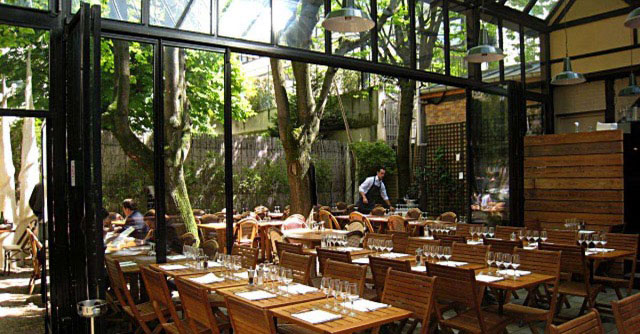
I looked around. The foyer next to Leni’s Restaurant with its tall
potted trees was filling up with people. The Entrepôt was an art
house, playing classics and underground hits all day long. I
grabbed the program from the counter. Last Year at Marienbad
by Alain Resnais was scheduled for 7:35 pm. I rarely went for
evening shows at the cinema. I preferred the quick in and out of
matinees or early afternoons, a casual approach I had adopted
when I became a journalist and had to attend night performances.
Theater, opera, ballet seemed to set higher demands and often
leave deeper imprints than movies. But the opposite had been
true when I was very young. Films—Bergman, Fellini,
Antonioni—gave me the intense fantasy close-up with women and
men I wanted to meet and fall in love with.
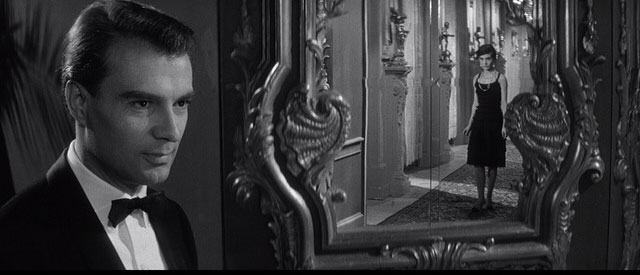
Seeing Last Year At Marienbad, on my first visit to Paris, as a
schoolgirl, was like walking through a thick curtain of dreams.
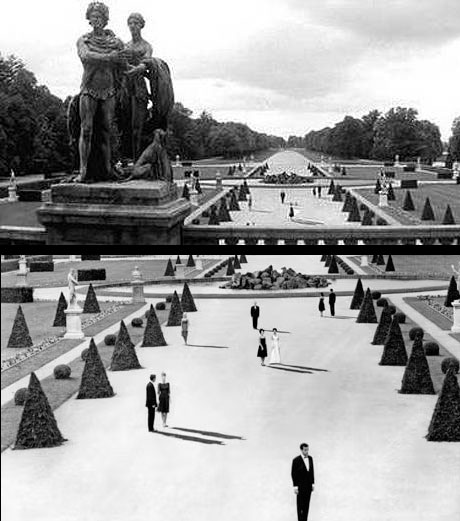
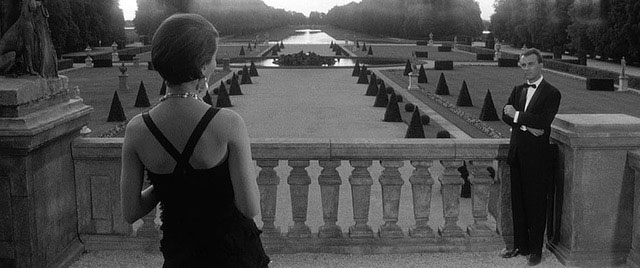
The camera-travels along empty hallways of a luxury hotel, the
nostalgic murmur of the voice-over, forbidding geometries of a
French park… Everything seemed a metaphor for a loneliness
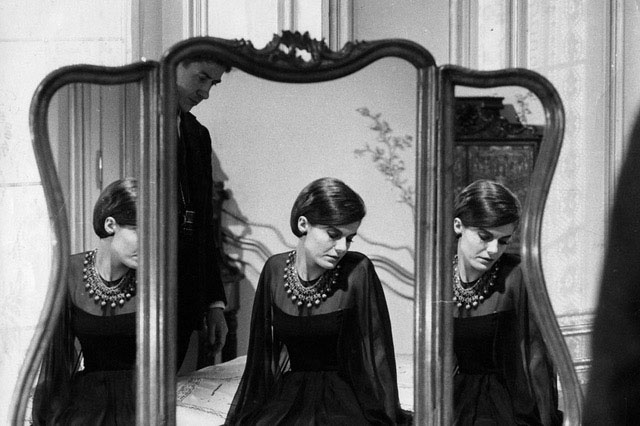
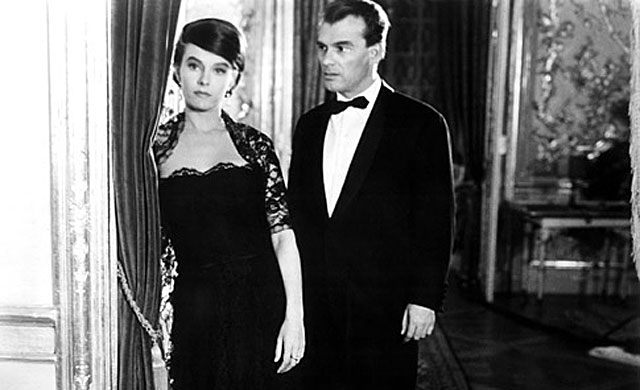
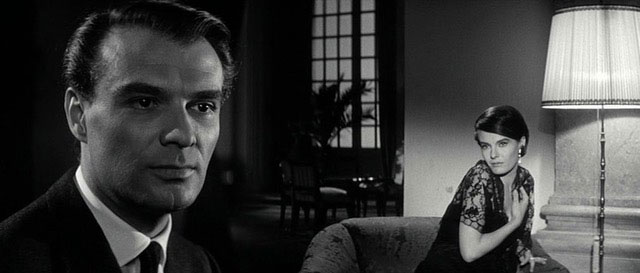
and longing I recognized. A man who mastered a mathematical
match-stick game held the power over a woman who was as
beautiful and passive as a marble statue. Was there even a story? I
didn’t grasp the story but felt it was somehow about me and the
man who was in love with me.
The crowd in the cinema had suddenly thinned out. I followed
some late-comers into the auditorium just as Marienbad started,
and sat through it, stunned. This was not the film I remembered.
It was like watching a train wreck, the crash of a romantic vision
of “life as poetry” that had upheld me throughout my youth. Had
I made up a fairytale in my inability to follow the text?
I walked out in disbelief, back into the foyer. Students, artists,
film-buffs in high spirits from Alain Renais’ “masterpiece” were
rapidly filling up Leni’s restaurant. Near the exit, Dominique
Araki was saying good-bye to a chic-looking couple. She was
already turned toward me, not looking the least bit surprised.
Had she been following me?
“Not again?” I said, coming up to her.
“A coincidence twice in one day?” She had an impish look on her
face.
“You don’t seem surprised.”
“After Marienbad ? Anything seems like a set-up, no?”
“Artificial for sure,” I said with some emphasis. “Honestly, did
you make this happen?”
“You mean, did I follow you around? Why would I do that?”
I was thrown off by her directness. I wanted to say, you’ve spied
on me before. “It’s just too unbelievable.”
She laughed. ”I agree. It’s surreal. Why did you wish to see it
—see it again?”
I was torn. “To tell you the truth, I’m in a bad mood. I hated it. It
was nothing like what I remembered.”
“So you have changed? I enjoy it more every time. Memory,
repressed memory, invented memory—mein Leibgericht.” Her
“favorite dish”? She must have seen the doubt in my face. ”Let’s
compare notes, let me invite you to a glass of wine!” Apparently
she was alone. There was something infectious in her enthusiasm.
Or maybe it was her slight accent, her relish saying the German
words. I scanned the crowd milling in the foyer. She slipped her
arm under mine and moved us toward the restaurant. “I know
Leni. She’ll find a spot for us.”
Leni, a small, sturdy person in a chef’s apron, hugged Dominique
and got a waiter to maneuver an extra chair into the corner of a
long table at the furthest edge of the café. Not a place to make an
easy escape from. A carafe of wine appeared with two glasses. We
had our private corner in the hubbub, edged into the forest of
Leni’s potted trees.
“To Leni,” she proposed. “Tell me why you hated it now and
didn’t hate it then. When was then?”
I lifted my glass. “To being followed—and then interrogated!”
She gave me a funny look. “Maybe you didn’t notice that I
changed clothes from this afternoon.” Indeed, now that our coats
and jackets were off, I noticed. She was wearing a bottle-green
sweater and skirt. A charming sweater, in fact, with buttons on
the shoulders that stood guard by her graceful neck like little
soldiers. Red tips of hair were side-swiping that neck as she shook
her head at me. “Marienbad has really upset you.”
“I’m sorry, it’s true. I can’t understand what I saw in it when it
first came out. This time I found it disturbing. I almost walked
out.”
“I would have walked out with you—to make sure you knew you
were followed.”
I felt sheepish having taken her presence personally when any
Parisian could revisit Marienbad just as I had—especially
someone who wrote essays on films.
“I know the movie by heart,” she said. “But I see a different story
each time. The woman does remember having met the man, but
she can’t admit it. No, they never met, he makes it up and she’s
seduced by his story. No again. He’s right, but she didn’t want to
remember, she forced herself to forget. No, she promised and
convinced herself it never happened…”
I watched her mouth spilling out the words. “You are
romanticizing it completely,” I said. “The whole thing is a male
fantasy about hunting down the elusive female and dragging her
away from her present owner. A rape fantasy, in fact. Cloaked in
all this ethereal beauty blah blah—totally empty. And that
woman—dead as a plank.”
Her eyes had widened. “I see your point. From this perspective
it’s outright necrophilia.” We both laughed.
I half-emptied my glass. “Pathetic. And this organ music droning
on...”
“But fascinating in its cinematic perfection and philosophy, no?
Don’t you like the theory that life, or love, or memory are just a
narrative—a changing narrative? Something in it must have
caught you, before?”
“Oh, what caught me was simply that it was French. I can see that
now. I was 17, my first time in Paris. It all sounded like poetry.” I
was aware of the loud clanking and nasal honking of French
voices at our table and beyond.
“You already had an ear for the language?”
“I was in love with my French teacher, a young bohemian, a real
charmer.”
“There’s nothing like love when it comes to learning a language.”
Her hands marked her statement with quotation marks.
“Like Japanese?”
She cocked her head as if that went without saying, but her
expression said, are you sure you want to know? I wasn’t sure.
“Love—and drama,” I kept going. “My besotted teacher was ready
to leave his wife and kids and marry me. It would have been a
scandal. I was sent away to France in order to get over it.“
“Ah, forget him, like the heroine in Marienbad. Did it work?”
“Yes and no. The whole thing was absurd and had to end badly.”
“So back then, you saw something in Marienbad that you knew?”
I looked at her. “Yes, I guess.” The green of her eyes had softened
– was that possible? Or was it a softness in her voice? The way she
was attentive, tilting her face toward me? “I’m not sure what I
knew. Something merciless—the French park without shadows.
Those endless hotel corridors…”
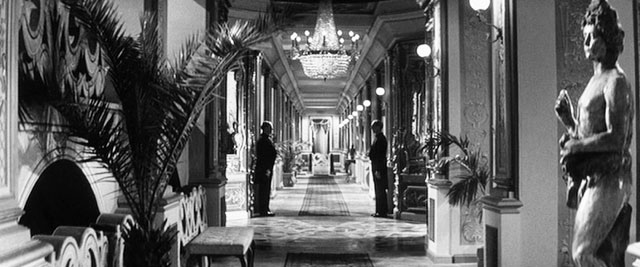
“A castle, no?”
“Afterwards, I always liked hotels. Any hotels. Being unmoored,
in-between, on the go.”
Our fencing ballet had stopped, our foils been dropped. From the
din around us I caught the words Resnais, Surréalisme, Delphine,
Nouvelle Vague.
“Maybe I saw Marienbad as a dream of getting away,” I said. “Not
just from my teacher, from everything.”
“Is that why you moved here? To get away?”
“You bet.”
She pensively drew on her cigarette. “How did you manage to
stay? Did you get a carte de séjour? Are you legal?”
“I’m a German enemy alien,” I said, “I’m undercover.” I enjoyed
her puzzlement. “Not really. Legally, I’m a ‘both-and’. They
invited me into their system. Half-way.”
“You mean you got an employment?”
“I got a French bank account.”
She raised her eyebrows as if she had an inkling of the story that
was to come.
|